

Cybersecurity in Remote Work Environments: Challenges and Solutions
Introduction
In recent years, work environments have undergone a significant transformation toward remote work, driven by technological advancements and the growing need for operational flexibility. These new work models have enabled organizations to leverage human talent regardless of geographical location while reducing certain operational costs and improving employees' work–life balance.
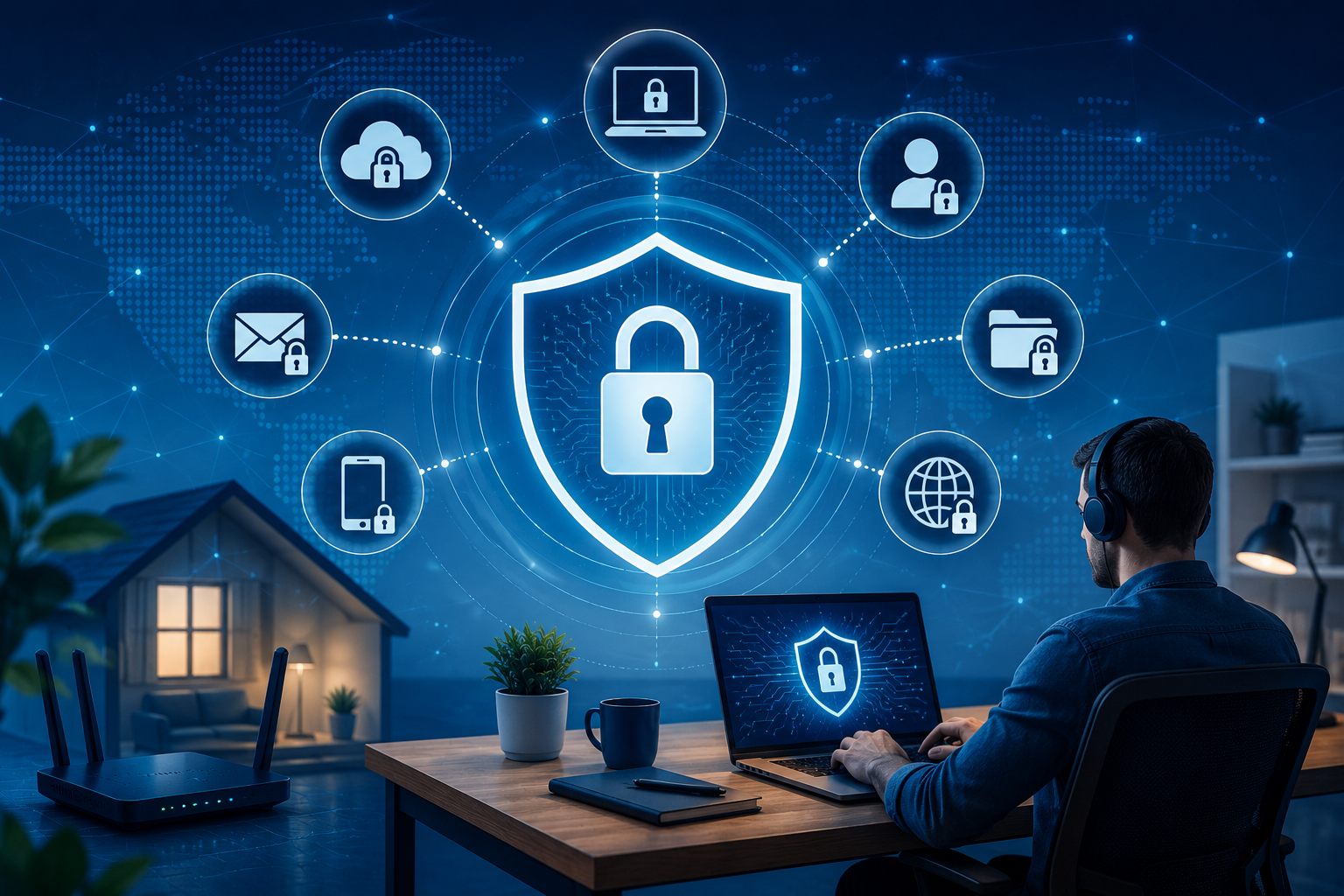
However, this transformation has also introduced new security challenges related to protecting data and digital systems. Employees are no longer working exclusively within secure corporate environments; instead, they rely on home networks, various personal devices, and multiple cloud-based services. This shift has increased organizations' exposure to cyberattacks. Consequently, cybersecurity in remote work environments has become a strategic issue requiring special attention from both executive management and IT professionals.
Concept of Cybersecurity in Remote Work
Cybersecurity in remote work environments refers to the collection of policies, procedures, and technologies designed to protect information and digital systems while employees perform their duties outside traditional organizational workplaces.
Its primary objective is to ensure the confidentiality, integrity, and availability of information while minimizing the risks associated with external networks, personal devices, and cloud-based applications.
Security Challenges in Remote Work Environments
Organizations encounter several cybersecurity challenges when implementing remote work, including:
Weak Home Network Security
Home networks often lack the same level of protection as corporate networks, making them easier targets for cybercriminals.
Use of Personal Devices
Employees may use personal devices that are not subject to organizational security controls, increasing the likelihood of malware infections or data breaches.
Phishing Attacks
Cybercriminals exploit remote work by launching phishing campaigns through emails and fraudulent messages aimed at stealing login credentials or sensitive information.
Difficulty in Security Monitoring
Cybersecurity teams face challenges in monitoring user activities and detecting threats when employees are geographically dispersed and operate in diverse working environments.
The Importance of Cybersecurity in Remote Work
Implementing cybersecurity controls in remote work environments is essential for several key reasons:
Protecting Sensitive Information
Organizations manage financial, commercial, and personal data that require high levels of protection against unauthorized access.
Ensuring Business Continuity
Effective security measures reduce the likelihood of operational disruptions caused by cyberattacks or technical incidents.
Maintaining Organizational Reputation
A security breach can undermine the trust of customers and business partners, negatively affecting the organization's reputation.
Compliance with Regulatory Requirements
Many regulations and international standards impose clear requirements for protecting digital information and data regardless of employees' work locations.
Effective Cybersecurity Practices
Organizations can strengthen the security of remote work by implementing several important measures, including:
Multi-Factor Authentication (MFA)
Multi-factor authentication adds an extra layer of security by requiring users to verify their identity through more than one authentication method before accessing organizational systems.
Virtual Private Networks (VPNs)
Virtual Private Networks (VPNs) encrypt communications between users and corporate systems, significantly reducing the risk of data interception during transmission.
Regular System Updates
Keeping operating systems and software up to date helps address known security vulnerabilities and minimizes the risk of their exploitation by cyber attackers.
Data Encryption
Encryption is an effective method of protecting information during storage and transmission, ensuring that data remains unreadable even if it is intercepted or accessed without authorization.
Regular Data Backups
Maintaining up-to-date backups enables organizations to recover critical data quickly in the event of ransomware attacks or technical failures.
The Role of Security Awareness
The human factor is one of the most critical elements in the success of cybersecurity. Therefore, organizations should implement regular cybersecurity awareness programs that cover:
- Recognizing phishing emails and fraudulent messages.
- Protecting passwords and using strong authentication practices.
- Safe use of devices and network connections.
- Proper handling of sensitive information.
- Prompt reporting of cybersecurity incidents.
These awareness programs help reduce human errors, which remain among the leading causes of cybersecurity incidents.
Modern Technologies Supporting Cybersecurity
Modern technologies are playing an increasingly important role in protecting remote work environments. For example, artificial intelligence (AI) systems can analyze user activities and detect abnormal behavior much faster than traditional security methods.
Identity and Access Management (IAM) platforms enable organizations to control user permissions with greater precision, while cloud security solutions provide advanced protection for both data and applications.
The Future of Cybersecurity in Remote Work
As flexible work models continue to expand, investment in cybersecurity is expected to become even more critical. Organizations will increasingly adopt advanced security concepts such as Zero Trust, security automation, and intelligent analytics to strengthen their ability to combat evolving cyber threats.
Furthermore, cybersecurity awareness will become an integral part of organizational culture, with every employee sharing responsibility for protecting information and digital systems.
Conclusion
Cybersecurity has become an essential component of the success and sustainability of remote work environments. As organizations continue to increase their reliance on digital technologies, the need for effective security controls that combine technology, policies, and employee awareness becomes increasingly important.
By adopting a comprehensive cybersecurity strategy, organizations can fully benefit from remote work while minimizing risks and safeguarding their digital assets and sensitive information.
Suggested References
- NIST Cybersecurity Framework.
- CIS Controls for Remote Work Security.
- ISO/IEC 27001 Information Security Management.
- ENISA Guidelines for Secure Remote Working.